
Duration: 15 days
This is an important exercise to understand different types of emotions and feelings behind such emotions.
Have a look at the Emotional Wheel. Take the print out of the same and stick it at a place where you can see it each day.
Now take your own time to understand how each core emotions have feelings and emotions behind the core emotions. Let’s take an example of the joyful emotion. Think of a time in recent week or month when you felt the emotion of joy. Now feel what was the reason behind that joy? Was it because of some excitement, hopefulness, being cheerful, sensuous. Think how those feelings behind the emotions can make you feel the essence of joy.
Can you sit still for a moment at a quiet place? Breathe, take a pause and close your eyes and feel the moment of joyfulness. Feel it in your heart, in your body and anchor the feelings of a positive state of joyfulness.
This anchoring will be helpful to establish a strong connection with the feeling’s joyfulness at any point of the day, before a tense interview, a meeting, an exam, a painful situation or anytime when you feel sad but want to come out of it.
All emotions are like passing clouds and no matter what ever is the situation that will pass as well but, in your core, you are a joyful person. This feeling of joy is there within you which you can get back anytime by anchoring if you want because joyfulness is an emotion you will like to focus more. This exercise you can repeat with an emotion of peace. Anchoring Joyful and Peaceful emotions can be extremely helpful for days when your feelings are clouded and heavy by other emotions.
Practice this for a couple of days or maybe for a week or even a month to establish a good understanding of emotions and feelings behind such emotions.
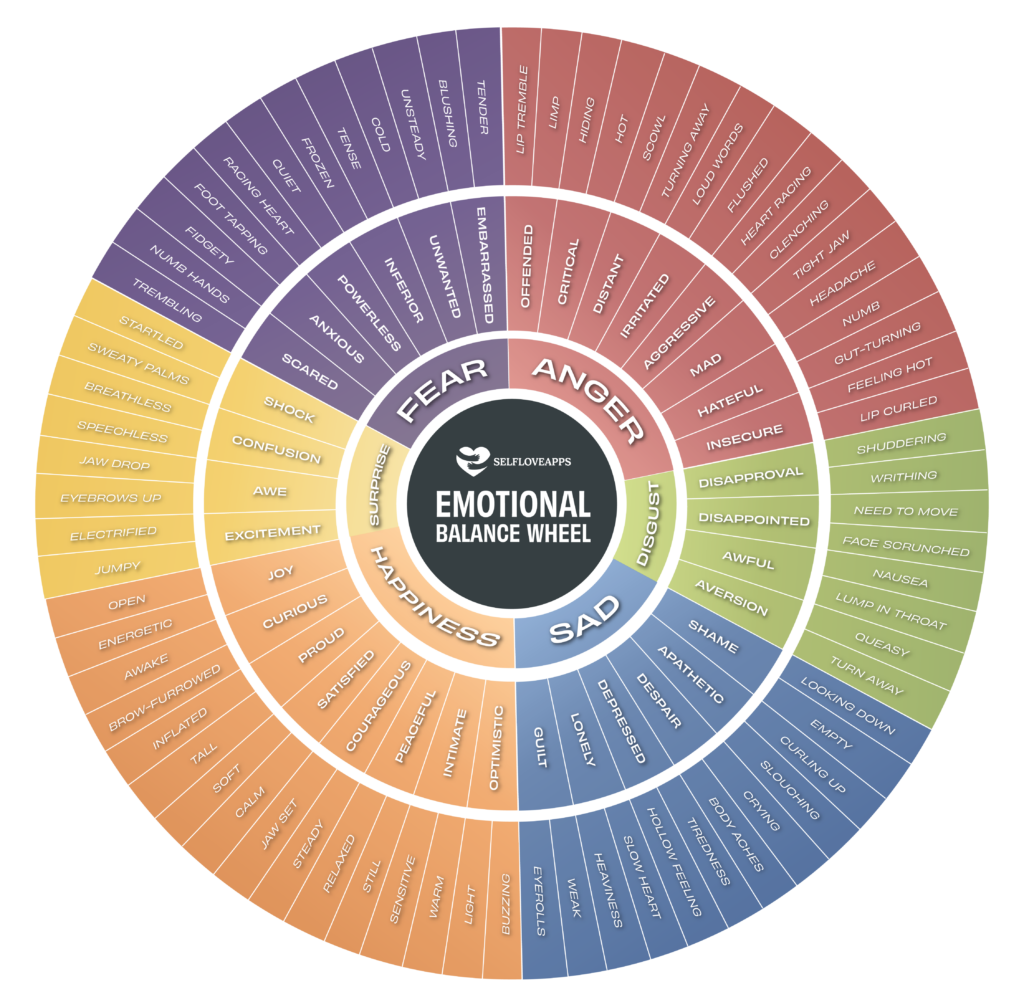
Self-reflection and emotional anchoring using the Emotion Sensation Wheel is a transformative way to increase awareness, regulate reactions, and foster well-being. The wheel visually maps primary emotions—joy, peace, sadness, disgust, anger, and fear—and secondary states (e.g., excitement, pride, guilt, awe, aversion, aggressive, anxious), showing how emotions arise and what bodily sensations or experiences may fuel them. Anchoring positive emotions like joy or peacefulness helps build resilience against distress and enhances your ability to access inner resources in challenging situations.
Practicing the wheel involves noticing not just the surface emotion but its nuanced underlying feelings and physical sensations. Repeated use fosters emotional intelligence, empowering you to move through sadness, anger, or fear while drawing on moments of inner strength, compassion, and joy. This exercise encourages users to sit with emotions, anchor into positive states, and observe emotional changes with
acceptance and curiosity instead of resistance. Over weeks and months, you’ll notice greater emotional stability, clarity, and the ability to return to uplifting emotions—even on tough days.
Answer to these Self Reflection Questions for Major Emotions:
Joy:
- When did I last feel truly joyful, and what sensations accompanied that emotion?
- What underlying feelings (e.g., excitement, hopefulness) contributed to my joy?
Peaceful:
- How does peace feel in my body?
- What triggers or environments help me access feelings of calm and relaxation?
Sad:
- What situations tend to bring up sadness for me?
- How do sadness and related feelings (e.g., guilt, disappointment) show up in my thoughts and body?
Anger:
- When am I most likely to experience anger or irritation?
- What body sensations do I notice with anger (e.g., tension, heat)?
Fear:
- What fears are most present for me lately?
- What does fear feel like physically (e.g., tightness, racing heart)?
Curiosity (Secondary – Joy):
- When was I last curious and what curiosity led me to discover?
Shame (Secondary – Sad):
- Can I identify one experience where shame surfaced, and what sensations did I feel?
Activity
This exercise helps you understand not just what you feel, but what lies beneath each emotion. By using the Emotion Sensation Wheel, you will learn to recognize, sit with, and anchor emotions consciously instead of being overwhelmed by them.
Purpose of This Exercise
To increase emotional awareness and emotional vocabulary
To understand emotions beyond surface reactions
To recognize bodily sensations linked to emotions
To anchor positive emotional states for difficult moments
To build emotional regulation and resilience